Showing posts with label science fiction. Show all posts

The Limit by Kristen Landon

Title: The Limit
Author: Kristen Landon
ISBN: 978-1-4424-0271-3
291 pages
Aladdin Books, 2010 edition


Description:

Set in a not-so-strange and not-so-futuristic world, 'The Limit' tells of a world where children are taken away from their homes and their schools and taken to what amount to be big factories, called workhouses, if their families cannot abide by the laws. The main law that sees many kids taken away is called 'the limit' and is a limit on how much federal debt anyone family can accumulate. Early in the book, the protagonist Matt sees a number of his peers taken away by the government. To his surprise, the government soon comes for him too. His father is too slow in trying to protect his son from being taken away, and Matt is brought to a workhouse to serve his sentence. To his surprise Matt has been placed in a different area of the workhouse where only certain kids are sent. He is allowed and computer and a cell phone and may order up just about anything he can desire (except freedom). Matt's sister is too taken to the same workhouse but sent to a much different section. He soon learns the truth behind the workhouses, but will he be able to stop it?

Review:

Not the most thrilling of the books I have read, but it is unique in that it fully understands the use of cell phones and technology by 'tweens'. There is texting and computer use going rampant throughout the book (as is the case in real life) and the kids are never far from their devices. The plot is sort of cheap science fiction/mystery and nothing too surprising (to my mind). The pace moves pretty fast and the reader is drawn up into the world of Matt and the workhouses before they even realize it. While not an exemplary piece of 'tween' fiction, it does get some things right and many a 'tween' might very well enjoy it, if only for the use of technology and its pivotal role in the novel.

The Navigator by Eoin McNamee

Title: The Navigator
Author: Eoin McNamee
ISBN: 978-0-375-93910-5
342 pages
Wendy Lamb Books, 2006 edition

Description:

A sort of fantasy/science fiction combination, 'The Navigator' tells the story of a young boy named Owen. His father has taken his own life and his mother has sunk into the depths of a deep depression. Owen's world is filled with anxiety and fear. He hears murmurs about his family being crazy and has an overwhelming fear of water. His one refuge is his den, a place out in the woods where he can be secluded from all the world's problems. After meeting a tiny man only known as the Sub-Commandant who tells his daughter Cati to essentially be Owen's bodyguard, and is recruited into a group called simply the Resistors. When Owen is brought amongst the Resistance the are skeptical of him due to some of his similarities to their greatest enemy, the Harsh (namely that both hold a phobia toward bodies of water). Owen must not only prove that he belongs, but must take on the mythic role of the Navigator, the only hope against in the battle of good versus evil.

Review:

I found this title to be extremely derivative of other good vs. evil, 'the chosen one' type of stories where one seemingly unaware and none-to-special (initially) child turns out to be the only hope for the 'good guys'. While not poorly written in any sense, one gets the feeling that we've all already read this book (or maybe just so many others like it). I am sure that some young people, especially boys interested in the whole good guys versus bad guys aesthetic, will enjoy this book. But, for me, it was very run-of-the-mill and offered little in excitement or innovation.

Lost Time by Susan Maupin Schmid

Title: Lost Time
Author: Susan Maupin Schmid
ISBN: 978-0-399-24460-5
169 pages
Philomel Books, 2008 edition

This book was on a sort of 'featured' table at the public library near my family's house (which is about 45 minutes away from my home in Seattle) and the cover design and jacket looked interesting enough for me to try. I know the mantra "don't judge a book by its cover" should be ringing in my ears, but old habits die hard.

Description:

This is a tale of the planet of Lindos, a world of ancient cultures and deserts of red sand dunes. The story revolves around a young girl named Violynn, whose parents have disappeared after a trip to a famed archaeological site. Violynn is highly suspect of the Arbiter, the powerful ruler of her planet in the disappearance of her parents and a recent break-in at her home. The Arbiter invites her to a masquerade ball and the Coil, a mysterious and powerful figure, also begins to show interest in Violynn. What is so special about her that two of the most powerful beings on her planet have all the sudden become very interested in Violynn? It turns out that some of her father's belongings possess some very powerful information; information that in the wrong hands could prove deadly. It is up to this one 12-year-old girl to save the fate of her planet and to find her parents.

Review:

This book is a strange blend of sci-fi, fantasy and a sort of pseudo-mystery book and, to me, is reminiscent of the works of Ursula K. LeGuin (albeit for children). The length of the book isn't too daunting or unnecessary (like many works of sci-fi/fantasy) yet there is no sacrifice in characters depth or plot development. The mix of genre's and the futuristic technology of the Croon (the ancient civilization) was enough to keep me interested, but the kids will probably relate more to the protagonist Violynn. Although nothing spectacular in terms of breaking new ground, this was a pretty fun book that is recommended for fans of sci-fi/fantasy.

Space Race by Sylvia Waugh

Title: Space Race
Author: Sylvia Waugh
ISBN: 0-385-32766-8
241 pages
Delacorte Press, 2000 edition

Being a fan of science fiction, I often am partial to select a book merely on the title and just hope that the contents fit my expectations (maybe not the best idea). Anyhow, that is how I chanced upon Sylvia Waugh's book. No recommendation, not even was the book set up differently on the shelf, I just noticed the spine, grabbed and was on my way.

Description:

'Space Race' tells the story of a young English boy names Thomas. Thomas lives a normal life, except that his parents are from what they call the Other Place and sometimes talk about it or say things in the old language. This is not too strange, as many kids' parents are from other countries but, as Thomas will soon find out, his case is quite different.

Thomas' parents are from the planet Ormingat and have been here on Earth since Thomas was quite young. Thomas and his family are going to have to go back to their home planet and his father tries rekindle Thomas' memory of his own people and world. In learning about his alien self, Thomas also gains a great deal of knowledge (and appreciation) for his 'normal' life on Earth.

Review:

To be honest, this was kind of a strange book for me. It is not that the writing was particularly poor or the plot ill-concieved, but for some reason nothing resonated with me. I had little connection to the characters and was hoping to see what their home planet was like. Instead the imminent trip 'home' never gets off the ground and once I realized this was the case, I lost interest. Maybe some kids out there will pick this book up and enjoy it greatly. But, for my money, there are so many other books out there that it is hard to recommend this one.

The City of Gold and Lead by John Christopher

Title: The City of Gold and Lead
Author: John Christopher
ISBN: 0-02-042701-8
218 pages
Aladdin Paperbacks, 1988 edition

The sequel to one of the first books reviewed here, I had some trouble finding this book (although I did not look too hard). I read all of the trilogy as a kid, but I remember not being too enthralled with the third one, so I'll leave my reviewing to the first and second installment.

Description:

Following the events of the first book in the Tripod Trilogy, 'The City of Gold and Lead' follows the story of Will, Henry and Beanpole after they made their valiant escape from the Tripods to the distant White Mountains. The boys decide to make a trek to the worldwide Games held in Germany. The Tripods choose the most fitting of these young men to be their servants inside their domed cities (the cities of gold and lead from the title). The boys must don fake caps, the mark of humans controlled by the Tripods, in order to make it to the Games and be selected. Two of the boys make it past the trial of the competition and are selected to work for the Tripod masters. Once inside the city, Will gets a chance to live with and see up-close one of the alien conquerors that fly the Tripods. He sees a massive sickly, massive and grotesque creature with long, slimy tentacles. From inside the domed city the boys find the secret to defeating their alien overlords, but must escape in order to spread the word.

Review:

The sequel follows much in the same vein as the first book and the world of the Tripods is well visualized and executed. The way in which the author portrays real-life places in this futuristic world as strange and new is a pretty exciting conception. The aliens, when I was a kid, read like a horror story. But as an adult, they seem much more cliched and predictable than I had remembered. The suspense of the book is kept up throughout, as Will (the protagonist throughout all three books) is nearly discovered to not be capped (how the aliens control the humans) on numerous occasions. A cool, sci-fi book for kids and the third book, while too much of a good thing for me, might be of interest to 'tweens' already invested in the first two books.

Whales on Stilts by M.T. Anderson

Title: Whales on Stilts
Author: M.T. Anderson
ISBN: 0-15-205340-9
188 pages
Harcourt Inc., 2005 edition

I essentially picked up this title solely for the fact that its' title and cover illustration caught my eye. I almost had to review this one!

Description:

Lily is 12 and her dad has a weird job for a weird man. Her dad's boss is bent on taking over the world and will stop at nothing to do it (even though Lily's dad says that adults use something called "irony" and that she shouldn't take him seriously). Larry, her dad's boss, plans to take over the world with an army of mutant whale fighters with lasers shooting out of their eyes. Lily's two friends Katie and Jasper are nearly as eccentric as her father and his boss Larry, and with their help maybe she can make sense of the ever-stranger situation.

Review:

This book is extremely quirky and self contradicting (on purpose). The illustrations are accordingly strange and the instances that Lily and her friends find themselves in are preposterous. The chapter titles are hilarious ("whale control to major tom" being a really good one) and the text is interspersed with strange, over-sized text. For my taste, Anderson's book seems like it has no attention span and jumps all over the place with the plot seemingly unimportant at times. With that being said, some of the chapters are truly hilarious and the illustrations match them perfectly. The book comes with a fake study guide and fake interview with the author that are totally silly and outrageous (I just hope they don't confuse any of the readers). While not my cup of tea, I could easily envision 'tweens' and younger teens getting a real kick out of this book

Out of the Silent Planet by C.S. Lewis

Title: Out of the Silent Planet
Author: C.S. Lewis
ISBN: 0-7432-3490-1
158 pages
Scribner, 2003 edition


While not specifically a children's book, and certainly with no indication that it has teens or 'tweens' in mind, I vividly remember reading this book when I was about 14 years old (being recommended the book after having heard of Lewis' 'Narnia' books). While this puts it at the higher end of what a 'tween' is, this is a book that I am sure a lot of young kids are reading (and enjoying). For some reason, tales of fantasy or science fiction are more often than not associated with children. While this book does not have a child protagonist and is not expressly written for children, there is a certain connotation that more teens and children will be reading books like this than adults (quite sad if you ask me).

Description:

'Out of the Silent Planet' follows the story of Dr. Ransom, who is ambushed on a dark and tempestuous night by an old colleague of his after he accidentally enters their secret laboratory. Ransom is knocked unconscious and upon his waking, finds himself finds himself in a strange room that appears to be moving in a strange way. What, in fact, has happened is that Ransom is currently on a spherical spaceship headed for Mars (or Malacandra as the natives call it). Ransom's two abductors, Mr. Weston and Mr. Devine, have already made a secret flight to the Red Planet and are planning their return trip (stocked with ammunition) with the plans of taking the planet over. Ransom escapes his captors and finds his way among the three species of sentient life living on the planet; a frog like species, the seal-like Hrossa and the giant Sorns. Ransom befriends the local inhabitants and aids them in defeating Weston and Devin and, in the process, learns more than any human ever has about our place in the universe.

Review:

A phenomenal book, it was even better reading a second time. As a kid I was only concerned with the cool-sounding names of the aliens and the battles with Ransom's two captors. Lewis has a gift for describing the surreal and alien and the book is keeps the reader enamored throughout. True, the book might be a little daunting and scary for a 'tween'. But for younger teenage readers and more advanced 'tweens', the book is a wonderful experience.

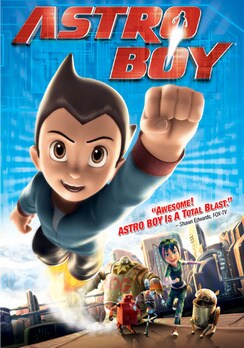
Astro Boy (Film)

Title: Astro Boy
DVD, 2011
With Nathan Lane and Nicholas Cage

Based on the classic and greatly popular Japanese manga and T.V. show of the same name, this movie is a 2009 CGI rendition of 'Astro Boy' which has been, in a sense, Americanized to fit the palates of American movie goers.

Description:

'Astro Boy' tells the story of a young boy and his scientist father. They live in the city of Metro City, a city way up in the sky populated by a plethora of robots; all with the inherent intention to make humans lives better. Toby (who is to become Astro Boy) is the young boy and protagonist in the story who is tagging along with his father who is going to show his newest invention to the city's mayor. The demonstration goes horribly wrong when the robot Toby's father is unveiling loses its' cool and begins to fight back against the demonstrations. Toby is killed in the resulting melee. However a new robot is created with a touch of Toby's DNA resulting in a robot that has all of the memories of Toby (the titular character Astro Boy). Toby's father is reluctant to accept this new robot version of his son and shuns him in an act of denial. After Astro Boy falls from the lovely Metro City down toward the junk heap and shoddy, over polluted land below, he befriends a new group of humans and robots alike and must make his mark in the Robot Games to thwart the evil mayor and win back his father.


Review:


While it is not the best of the CGI movie lot, there is some fun to be had with 'Astro Boy'. The animations seem to be a little cheaper than some of the more famous movies (but I am no expert and could be completely off). The story is fairly good and there are some fun and eventful happenings that make it an eventful experience. While it provides no lasting moral impact for 'tweens' it is a fun (if a little mindless) movie that most kids will appreciate.

A Wrinkle in Time by Madeleine L'Engle

Title: A Wrinkle in Time
Author: Madeleine L'Engle
ISBN: 0-312-36754-6
245 pages
Square Fish, 2007 edition

A very popular book for children and, again, one that I remember reading 'A Wrinkle in Time' was one of the first science fiction books I read (and even though I liked it, my love of sci-fi would not be sparked until later in my life). I vividly remember going to see a Seattle Children's Theater production based on the play, which had really cool, rolling sets that reversed themselves 180 degrees to be Meg's house or the different planets or dimensions.

Description:

The Murry family lives together with her family of three brothers and mother when when night she is visited by the mysterious Mrs Whatsit. The visitor informs Meg, the oldest daughter and protaganist, that an experimental idea her missing scientist father had been working on was in fact a reality. The Terrasact, a sort of wormhole or wrinkle in time (hence the title) that allows for travel between two dimensions. Meg, her youngest brother Charles and a friend Calvin travel to the house of Mrs Whatsit plus her friends Mrs Which and Mrs Who and learn that their father is imprisoned on the planet Camazotz which lies in another dimension. The only way travel there is through the Terrasact; essentially the fifth dimension. The three children learn that a massive evil entity called the Black Thing is currently planning to take over the universe. Meg, Charles and Calvin must travel to Camazotz and save Meg and Charles' father from his imprisonment under the all-knowing brain IT that controls the planet. It is up to the children to save Meg's father and fight against the evil that threatens to overtake the universe (in all dimensions).

Review:

One of the most unique books that I have had the pleasure of reviewing, the way in which L'Engle writes is unlike any other children's author. The book gives off a certain sense of mystery and awe that cannot be duplicated (in anything I have read). The book is a little difficult to understand (Einstein is mentioned briefly) and the idea of fourth and fifth dimensions is difficult for myself, let alone a 'tween'. The book is laced with religious overtones which may or may not throw off certain parents or teachers. The only other author that is reminiscent of L'Engle, that I can think of, is C.S. Lewis and that may explain some of the thematic similarities in their books. A really strange and fun book, especially for the older end of the 'tween' spectrum

Ender's Game by Orson Scott Card

Title: Ender's Game
Author: Orson Scott Card
ISBN: 0812550706
352 pages
Tor Science Fiction, 1994 edition

Upon hearing about this assignment for my LIBR 264 class, one of my close friends demanded that I read this book as part of my reviewing process. Being one of his favorites when he was a kid, I decided to give it a shot (I had heard about it before, but had not gotten around to reading it). I do not think it is a specifically 'tween' title but the protagonist is roughly that age and I know it is popular among the younger teen age group.

Description:

Ender is a Third, the third child in his family (which is a much maligned position to be in). Ender is child prodigy, like his older brother Peter, who has been trained from a very young age in the arts of war. He has a microchip in his head, called his 'monitor', through which the government can watch his every move. Ender soon shows a level of prowess higher than that of any of the other children, much to the chagrin of his older brother Peter. When Ender is sent away to a sort of space-pilot's academy, he begins to display a level of skill and intuition far above his peers. All before the age of 10, Ender has already gained himself a battalion of soldiers under his command and has become renowned throughout the military. Peter, back on Earth, fueled by his inferiority to and hatred toward his brother, starts a plot to take control. Between Ender and his brother, the fate of the world rests in the balance.

Review:

A really good book; now I understand my friends vigilance in supporting the title. However, the level of violence and complexity of the book may not make it the ideal 'tween' title. There is one scene very close to the beginning of the title in which Ender is forced to fight with the leader of a group of bullies. The scene is described in vivid detail and shocked me with its graphic violence. The majority of the book focuses on wars and battles (mostly set in space) in which Ender is involved. War is a constant; a theme that dominates the book. So, with an older 'tween' or one who has displayed a level of maturity with regards to reading and the watching of movies, this book may end up being a life-long favorite (as in the case of my friend). Nonetheless, this book (which has won the two most coveted awards in sci-fi, the Hugo and Nebula awards) is very well written and a great read, but the violence and subject matter may make it a little too much for some readers.

The First Men in the Moon By H.G. Wells

Title: First Men in the Moon
Author: H.G. Wells
ISBN: 0-460-87304-0
201 pages
Everyman Paperbacks, 2000 edition

While not specifically a 'tween' or even a teen book, my mother reminded me of how much I liked it when I was in middle school, so I decided I would take another crack at it.

Description:

'The First Men in the Moon' Tells the story of a young businessman named Bedford who meets a struggling scientist named Cavor. Mr. Cavor develops a new, gravity defying substance, naming it 'cavorite', that nearly tears his house clean off of the ground from its awe-inspiring force. Bedford convinces Cavor that they should build a rocket and use Cavor's new scientific breakthrough to propel them to the Moon. Upon their arrival, the two men find the surface of the moon a cold dead desert of rock and rubble. But once the sun rises across the Moon's surface, the two men cannot believe the flora and fauna that spout out of the planets surface. The two soon realize that the planet is run by a race of insect-like men called the Selenites. Ruled by their "Grand Lunar", the Selenites soon find out about the presence of the two men from Earth. Keeping their wits about them, the two humans must find away to escape from the Selenites and make their way back home.

Review:

I forgot how much I liked this book as a kid; and now I know why. The scene where the two men witness the morning on the surface of the Moon is unforgettable. While it might be little bit difficult for some of the younger 'tweens' the kids on the older end of the spectrum will truly enjoy this sci-fi adventure. Written in a sort of serial format, which may be unintentional, the book is very fast paced and will keep just about anyone enthralled. A really good book for kids on the older end of the 'tween' age range.

The Giver by Lois Lowry

Title: The Giver
Author: Lois Lowry
ISBN: 0-440-2376-88
179 pages
Laurel Leaf, 2002 edition

One of my favorite books when I was a kid, 'The Giver' is an eerie sci-fi influenced book that I was excited to relive.

Description:

Set in a world where everything is uniform, every one has the same house and dresses the same and everyone follows the same routine, 'The Giver' follows the story of a young boy named Jonas who is eleven years old (called an Eleven, as they call everyone by their age group). Every family looks the same, has the same number of people and is expected to act the same. The "Community" as it is often referred to, is where Jonas lives and in the community there lives the Receiver of Memories who serves as the library of all the knowledge and memories of everyone in the Community. Jonas is tabbed to be the next Receiver of Memories. Through this new occupation, Jonas is enabled to experience a whole range of emotions that are not possible in the cold, calculated and monotone world in which he lives.

Review:

The world that Lois Lowry has created in 'The Giver' (which has two sequels) is a classic setting in children's literature. The Community is a very unique invention and some of the most compelling parts of the book are when Lowry explains another oddity of the place where Jonas lives. It would be hard to review this book without mentioning some of the controversial aspects (which, to me, are nothing to be worried about). There are a few references to what are referred to in the book as 'stirrings' which are references to things of a sexual nature. These are mentioned only briefly and are in no way inappropriate for kids to read (in my opinion) and are actually dealt with in a very realistic and toned down manner. The overall socio-political structure of the Community has also drawn some criticism but the quality of the book and its uniqueness in terms of the world that Lowry has created make it almost a must-read for any kid. Highly recommended.

Battle For Terra (Film)

Title: Battle For Terra
DVD, 2009
With Evan Rachel Wood and Luke Wilson

Description:

This science fiction movie takes place on the planet Terra, where the peaceful and artistic Terrians float through their beautiful cities like hummingbirds. Coming on their massive spaceship dubbed "The Ark", the last of the human race are traveling through space in search of a new planet to call home. When one of the humans crashes on the planet, he is rescued by a young Terrian named Mala, who agrees to help the man repair his ship if he will in turn help her to find her father who was taken hostage by the humans. Mala and the man, named jim, finally make it back to the human mothership in orbit around Terra. Mala finds her father nearly dead in a laboratory-like room full of captive Terrians.

Once on board the human ship, Mala and Jim learn of the humans plan to 'terraform' the planet and make its atmosphere breathable for the humans. Mala and Jim must do whatever they can to save the Terrians and all of the other native life on their planet from the overzealous humans.

Review:

A fun, CGI animated sci-fi movie for the kids, "Battle for Terra" is a pretty good movie for kids and adults alike. The plot is a little bit predictable and derivative of other movies and books, but the movie is beautifully animated and is quite engaging. Some of the voice acting is pretty dry, but the plot and the animated effects help to take your focus away from the movie's setbacks. Overall, a pretty good movie that should be fun for the whole family. There are some scenes of death and some explosions with disastrous results, but there is nothing that should make the film inappropriate for 'tweens'.

Journey to the Center of the Earth by Jules Verne

Title: Journey to the Center of the Earth
Author: Jules Verne
ISBN: 1-59308-252-5
248 pages
Barnes and Noble Classics, 2005 edition

While not specifically a book for 'tweens', many of Jules Verne's books have been popular with younger teen readers (including myself at that age) and have been associated with this age group, albeit at the older end of the spectrum.

Description:

Professor Otto Lidenbrock and his nephew Axel come across an old piece of paper lodged in the pages of an old Icelandic book. After deciphering the code written on the paper, the Professor and Axel realize that the note describes a route, through the Snaefels Yokull volcano in Iceland, to the center of the earth itself. The two then decide to pack up their things and make their way to Iceland, where they will begin their journey.

The two adventurers follow the deciphered code into one of three openings in the crater of the volcano, just as the shadow of one of its' peaks reaches the center. The Professor and Axel make their way deeper and deeper into the earth, facing treachery in the form of rock slides and roaring rivers of water until they find themselves in a sort of subterranean world, with lakes filled with hideous monsters and an underground race of giant humans that tend to strange herds in their long-lost pastures. As the two make their way to the end of this strange world, filled with such curiosities as a giant mushroom forest, they are caught up in the current of a powerful stream of water, which they soon realize is headed for the surface in the form of a geyser! After the Professor and Axel regain their wits, they find that they have been deposited by the geyser somewhere in Italy, thousands of miles from the beginning of their underground journey.

Review:

A fast-paced story full of references to old scientific theories now seemingly ridiculous, Verne's book offers a fun and fantastic ride through the Earth's underbelly. While the version I read included a long introduction and a literary criticism in the afterword (obviously intended for older readers) there are many versions of this book (abridged, unabridged and in audio form) that are targeted more toward the younger reader. This copy contained nice illustrations which were added at convenient intervals which added a nice touch to the text. Overall, a really fun read that tweens and early teens should truly enjoy.

The White Mountains by John Christopher

Title: The White Mountains
Author: John Christopher
ISBN: 0-02-042711-5
214 pages
Collier Books, 1988 edition

One of my favorite books as a child, The White Mountains by John Christopher is part of a trilogy, The Tripods Trilogy, that follows the story of a young boy named Will Parker as he and his friends face their Tripod overlords. One of the first series to pique my interest in science fiction, this book holds a special place for me and is one that I was eager to review.

Description:

A young boy named Will Parker finds himself in a world where the Tripods, invaders from another planet, rule over the Earth. Will lives in a sort of medieval village with his family, where he hears rumors of a past before the Tripods; a time known for fear and chaos and of cities as far as the eye can see. Will cousin Jack is fast-approaching his Capping ceremony, a time for every child during which the Tripods come down from the heavens and place a metal cap on the child, marking their transition to adulthood. Fearing his own Capping, Will hears of a far-off land where people live without caps and free of the Tripod's rule and he decides to run away from home.

Will is joined in his journey by his sworn enemy and cousin Henry, and along the way they meet a strange young boy with a strange accent whom they nickname Beanpole. Set in what the reader soon can discern is Europe (England and France), the boys travel through the wooded countryside and a ruined Paris on their way to the White Mountains; the fabled land where people live in freedom. Will and his comrades find it a difficult road, but along their way the learn more about the world in which they live and the Tripods that rule their planet.

Review:

As with many popular works for tweens, The White Mountains does a nice job setting up a situation wherein only young people have a chance to save the day. In this case, due to the fact that Will and his friends have not been Capped, the young people are the only ones that find themselves outside of the Tripod's control. A very nice instance of escapism for kids; a fantastic world in which young, pre-teens are the world's only hope. Re-reading this book, I repeatedly had those type of "Ah-Ha" moments in which you remember something from your past that you had completely forgotten. One such moment was the portion of the book in which the boys find themselves in the ruined city of Paris. I was brought back to the exact moment when I read that section and began to foresee what was to come; as if I had just read it yesterday!

All in all, this book is a great example of science fiction for tweens. While it does not present the most challenging read, in terms of reading level or of ideas, it nonetheless should be an enjoyable read for tweens interested in science fiction or adventure books in general.

Dune by Frank Herbert

Title: Dune
Author: Frank Herbert
ISBN: 0399128964
517 pages
Ace Books, 1999

For my first review, I have selected a book that I have recently re-read and seems perfect as a starting point for materials for ages 9 to 14. Dune, by Frank Herbert, was a favorite of mine when I was this age (I think I first read it when I was twelve) and has been very popular in the realm of science fiction for many years but also contains many topics which are marginally appropriate for this age group. This combination of popularity and more adult oriented themes is a very important issue in judging which materials are suitable for tweens.


Description:

Dune is set in a far away galaxy where the young prince Paul Atreides and his family are being forced to leave their home planet of Caladan for the desert planet Arrakis, the home of the all important drug melange, usually just referred to as "the spice". The melange is allows the empire running the galaxy to mover their ships across great distances and has an little understood, almost mystical effect on its users. Upon arriving on Arrakis, Paul and the other members of the House Atreides realize that their being sent to the dessert planet is indeed a trap set by their arch rivals; House Harkonnen.

The indigenous people of Arrakis, called the Fremen, live deep in the dessert and harvest the spice melange. These people have a legend that tells of an outsider who will become the Muad'Dib; essentially the chosen one who will lead the Fremen. Dune follows the young Paul Atreides in his transition into the Muad'Dib and its' affect on him and his families fate in the galaxy.

Review:

Dune is often considered a classic of modern American science-fiction and this assertion certainly fits well. It is a long book, clocking in at roughly 500 pages and contains a lot of fake ecological tracts regarding the fictional planet Arrakis but this does not take away from the book in any significant fashion. The real trouble here is that some of the material in this book is of a 'Rated R' nature and questionably suited for 'tweens'. There are several scenes of murder and loads of sexual tension with one character in particular whose homoerotic feelings for his nephew come up multiple times in the book. Not that a book like Dune should be hidden from kids this age, but some of the content is questionable and may be unsuitable for certain children. All in all, a great book that older and more mature kids in this age group should enjoy.